


Our Response to Disaster 

How 211 San Diego Helps During Disasters

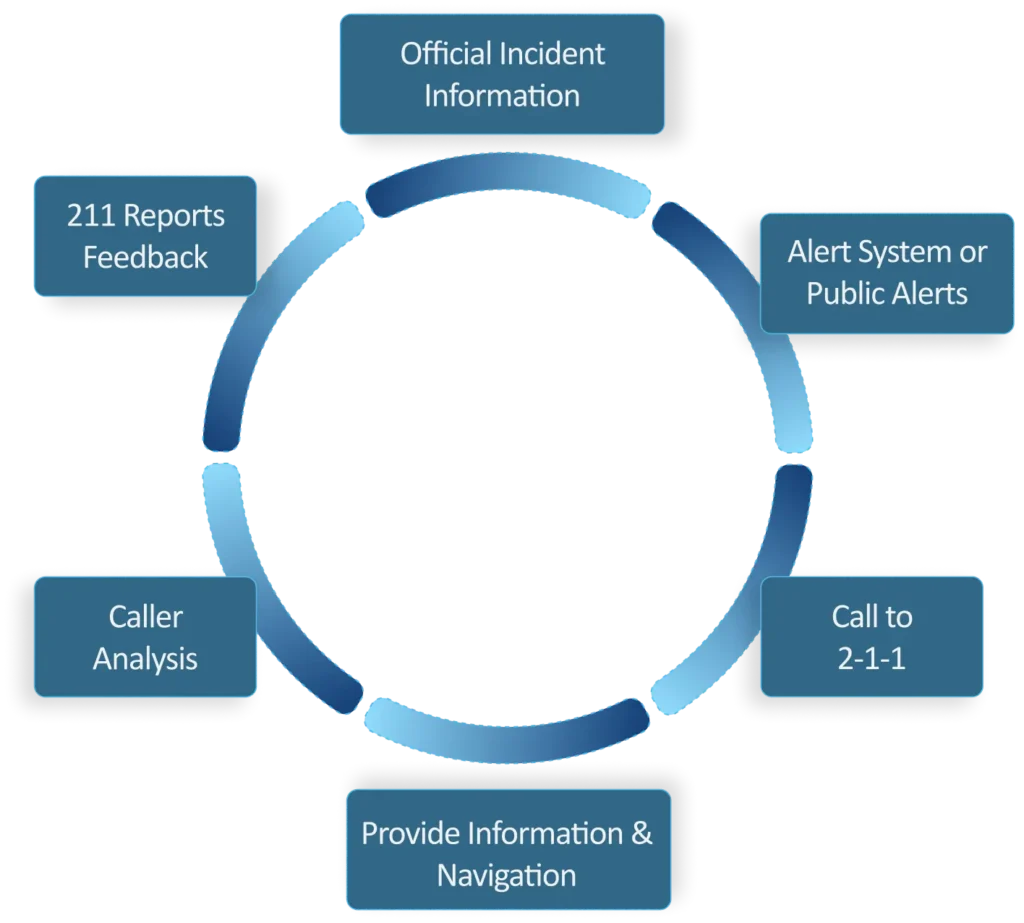
In times of disaster, government agencies and San Diegans rely on 211 San Diego to be the region’s single, trusted place the public can go for accurate, real-time information.  We prevent confusion, reduce misinformation, and keep emergency systems like 911 from being overwhelmed so that government agencies can focus on response while we manage public demand. 


211 San Diego partners with the County of San Diego to share and translate complex and often confusing information into clear, human help – reducing frustration, inequity and missed opportunities for accessing assistance. 

How Can You Use 2-1-1 During a Disaster? 

If you are in immediate danger, always call 9-1-1; if you are safe and want to know what options you have for help, call 2-1-1. 

We can help you find out if your neighborhood is impacted, how the situation began, what the status is, and—most importantly—what you can do to help your family stay safe and well. 

Whether you’re navigating road closures, checking if your home is in an evacuation zone, or trying to find a shelter that can accommodate your pets, livestock, or specific medical equipment, we provide the real-time clarity you need. 

But our work doesn’t stop when the smoke clears or the power comes back on. We are available 24 hours a day before, during, and following a disaster—helping you navigate the maze of insurance claims, finding resources to rebuild, and connecting you with the mental health services essential for processing the trauma you may have experienced or triggered. 

When crises hit, these are the concerns people bring to us most often, and we’re here to help with each one:

Disaster Response Resume

  • 2007 Firestorm
  • 2008 Flooding
  • 2008 Hurricanes Gustav & Ike
  • 2009 H1N1
  • 2010 Easter Earthquake
  • 2010 Northern California (support provided)
  • 2011 Region-wide power outage
  • 2011 San Onofre Nuclear Plant Alert  
  • 2012 Hurricane Sandy 
  • 2014 North County Fire Siege 
  • 2017 Lilac Fire – Fallbrook 
  • 2018 West Fire – Alpine 
  • Woolsey Fire – 211 L.A. Assist  
  • Hepatitis A Outbreak  
  • 2020 – 2023 COVID-19 
  • 2020 – USS Bonhomme Richard fire
  • 2022 – MPox
  • 2023 – Tropical Storm Hilary
  • 2024 – January Storms
  • 2025 – Earthquake
  • 2025 – Kearny Mesa Plane Crash
  • 2025 – Los Coches Fire

211 San Diego Activated

211 San Diego is essential disaster infrastructure, just like emergency operations centers and public health systems. We are built to scale quickly. 211 San Diego prepares staff, technology, and partners to immediately connect people with resources such as shelter, food, health care, and other needs, to navigate the impacts of a disaster.  

Our Partnership with Airbnb.org

40
families provided housing

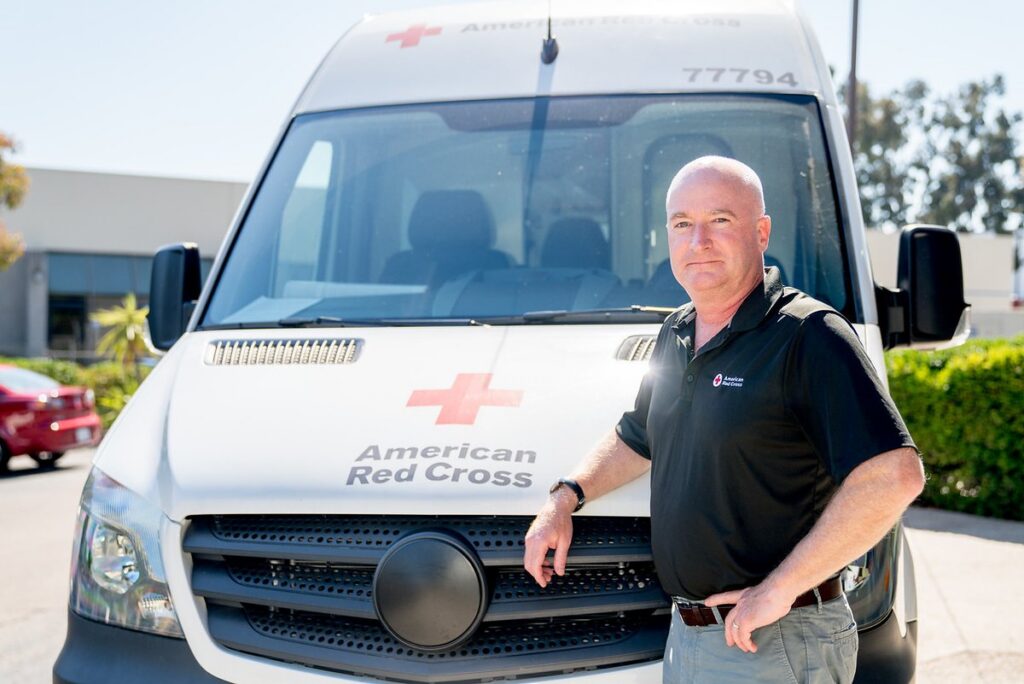
In response to the plane crash in the Tierrasanta Military Housing community last year, 211 San Diego partnered with Airbnb.org to provide immediate housing support for residents in the impact zone. 40 families were placed in temporary housing through the partnership and working with Liberty Housing and the American Red Cross.  

How We Help: Client Spotlight 

“First, thank you SO MUCH for having this service and not requiring us to jump thru endless AI hoops to find help. Second, thank you for having 24-7 availability and training your agents to teach us the "speak to agent" work around.” 

Anonymous
“The agent who helped me made me feel like he had looked for and given me all the information he could find to help me! I was very emotional when I called and the agent made me feel better. I felt like I had options to help me and I had resources.” 
Anonymous
“Thanks so much for 211 saving my life in the care I received due to my trauma.” 
Anonymous
How We Collaborate: Partner Spotlight 

FAQs

211 San Diego is the designated non-emergency information contact center for communications in the San Diego County Emergency Operations Plan. This partnership ensures that 911 remains open for life-threatening emergencies while we handle the massive volume of informational inquiries.

We participate in the County’s Web Crisis Information Management System and may have staff physically present in the County’s Office of Emergency Services (OES) Joint Information Center during a major disaster. By having direct access to official County systems and leadership, we receive verified, official updates. We don’t just relay rumors; we provide “authorized” information—meaning every update about evacuation zones, fire containment, or road safety has been vetted by our government partners.

211 San Diego includes in our resource database support services for those with Access and Functional Needs (AFN) such as those with disabilities, chronic medical conditions, or limited English proficiency. We provide tailored guidance for those on life-support equipment or those requiring accessible transportation, matching their specific needs to the resources available in real-time.

We also partner with San Diego Gas & Electric (SDG&E) to prepare those with AFN for any potential Public Safety Power Shutoff (PSPS) that may impact their medical equipment. This includes building a disaster preparedness plan that may involve gathering contacts at their medical equipment manufacturer, local hospital, and other care team to ensure that they can receive the Oxygen, batteries, and more that they may need in the event of a PSPS.

While we don’t order evacuations, we have access to the County of San Diego’s emergency map which allows us to look up an address and confirm if it is in or near an evacuation zone. We can also refer those being evacuated to evacuation shelters that fit their needs. For complex situations, we may also be able to coordinate with our nonprofit partners for extra assistance such as for residents who need to relocate with livestock or pets, ensuring they find a space that can accommodate them rather than being turned away.

Once the response phase ends, we transition into Recovery Coordination. We may connect residents to cleanup crews, mold suppression services, and financial aid. We also help survivors navigate complex insurance and government assistance programs to jumpstart the rebuilding process.

There are several partners that coordinate volunteers during or following a disaster. Depending on partner capacity, we may refer people to these coordinating entities or directly to the provider needing volunteers.

We can refer people to organizations accepting material or food donations. We do not currently list financial donation opportunities in our database. However, we vet foundations and nonprofit partners seeking donations, and we often publish their financial donation requests on our active disaster webpage. If someone calls wishing to make a financial donation to a partner, we’ll likely refer them directly to our disaster webpage to review their options for donating.